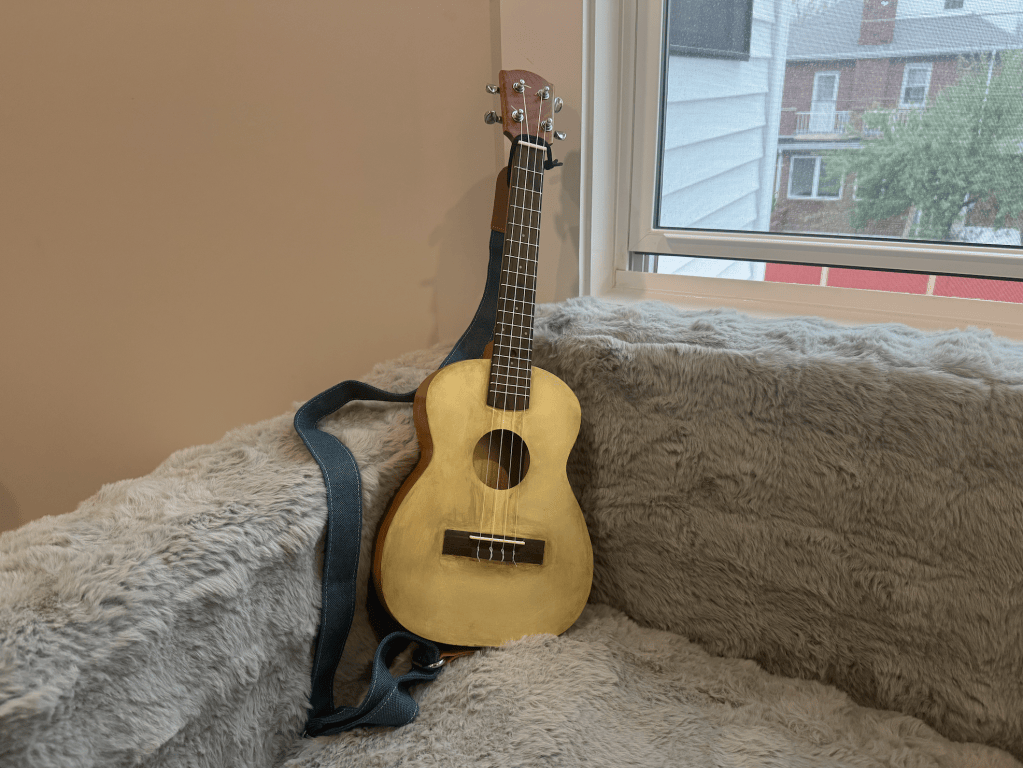
I designed and built a tenor ukulele from scratch, pairing a CNC-machined wood body and neck with a waterjet brass face. I wanted to find out what it takes to make an instrument that holds together under string tension and also sounds good. The only components that I did not make was the hardware.
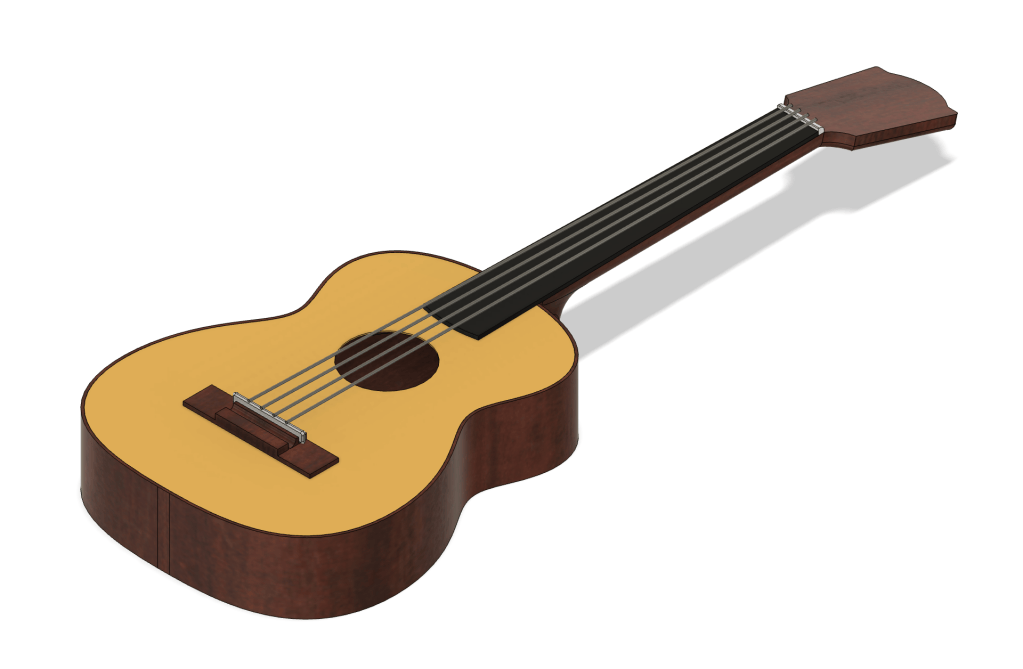
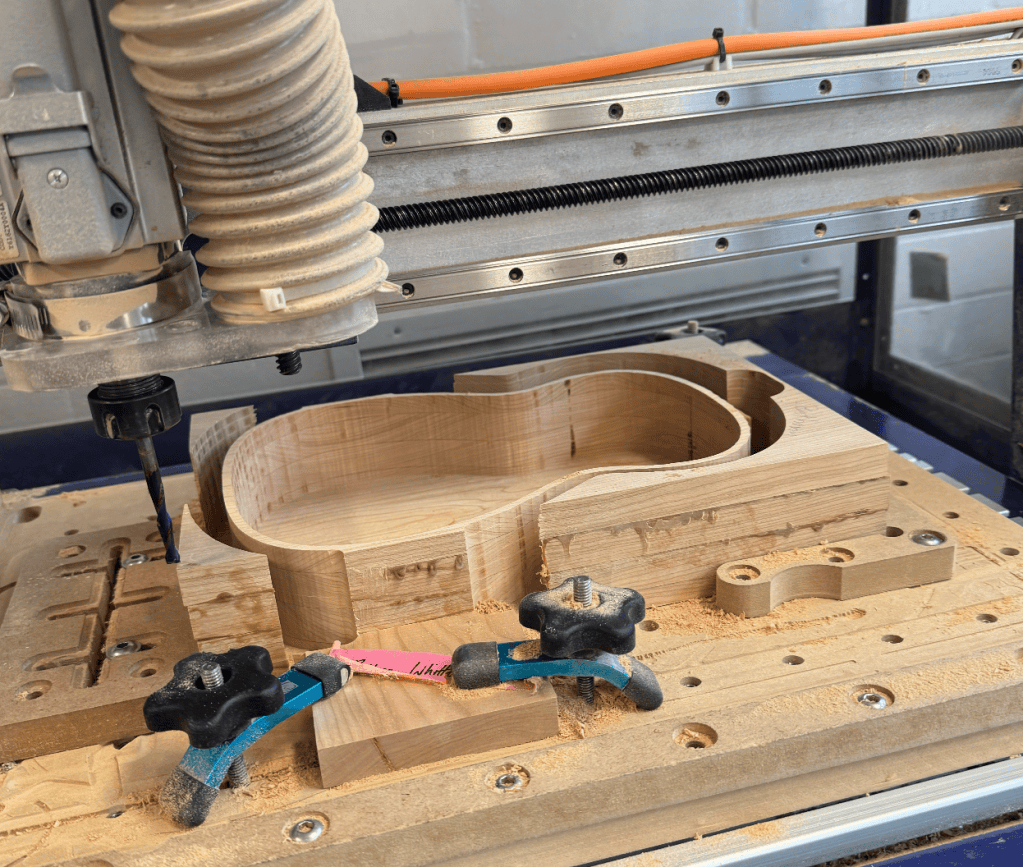
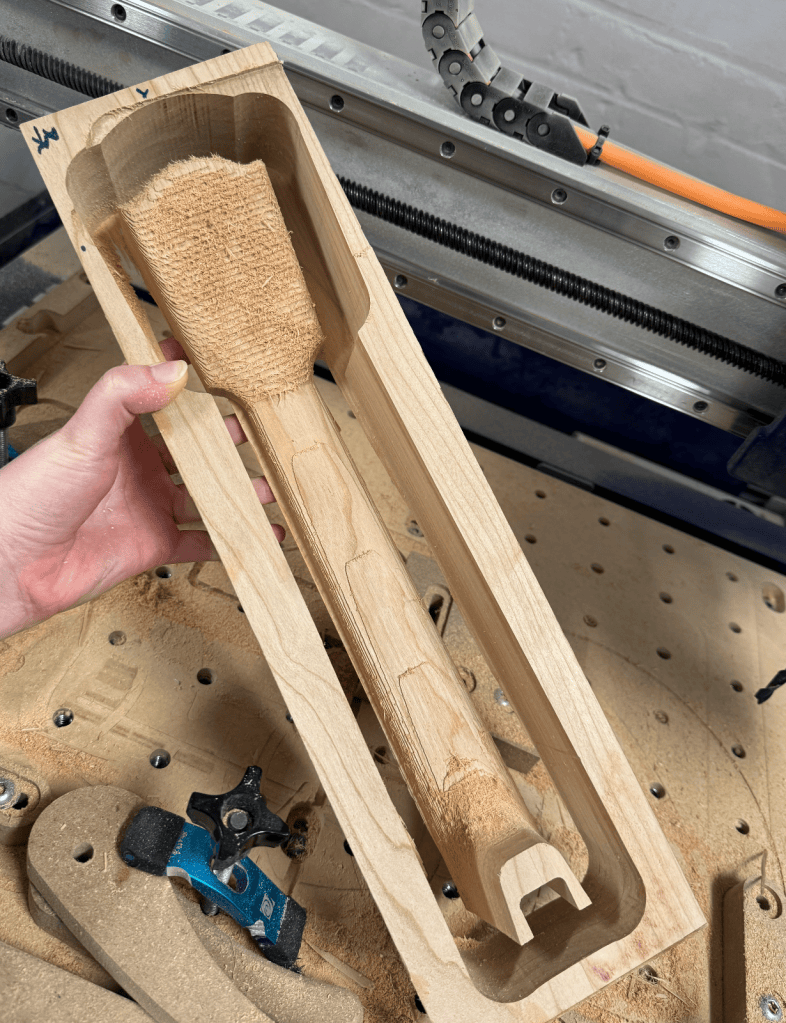
I glued 3/4″ wood sheets into large blocks, then cut the neck and body on a ShopBot CNC, which gave a detailed profile and left very little post-processing. The brass face was cut on a waterjet, and I assembled everything with wood glue, two-part epoxy, and a single screw joining the neck to the body. I intentionally left out internal bracing and support blocks to hear how a minimally supported body would sound compared with a traditionally braced ukulele. For finishing, I used a penetrating Colonial Maple stain to bring out the grain and protect the wood deep below the surface, then two coats of polyurethane to guard against scratches and humidity.
Within three days of being tensioned, my first version fell apart. The neck pulled on the body and warped it, and the epoxy holding the brass face tore under the load. I added tension rods and internal supports to straighten the neck and reinforce the neck-to-body joint, and the connection is now far stronger.
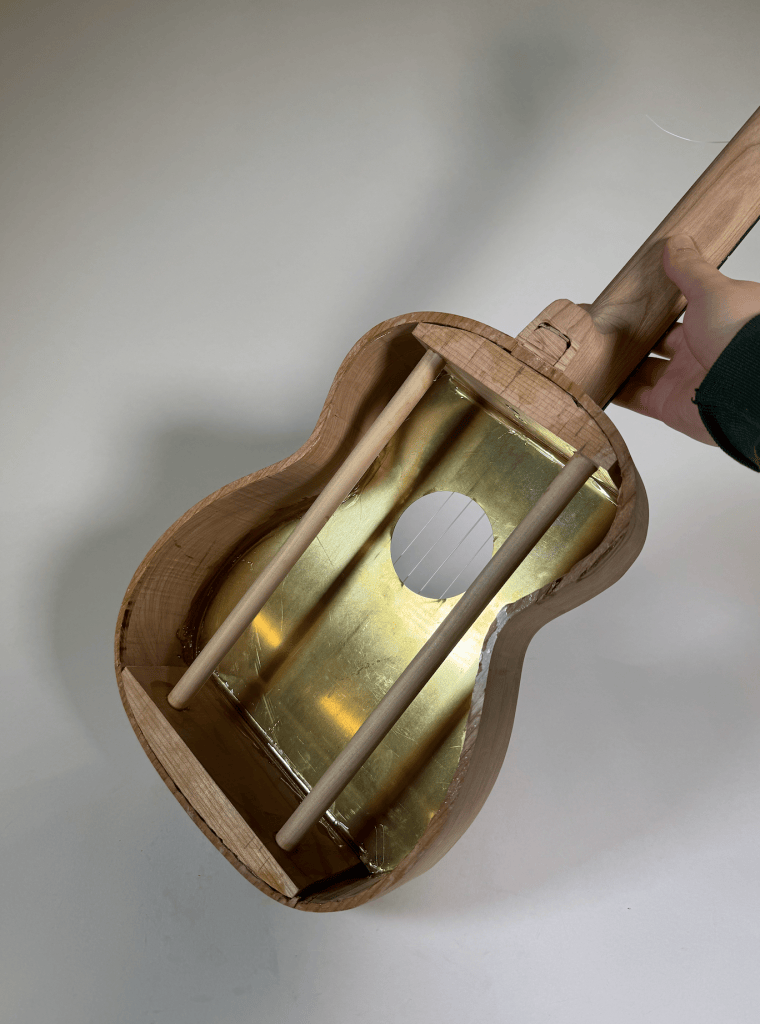
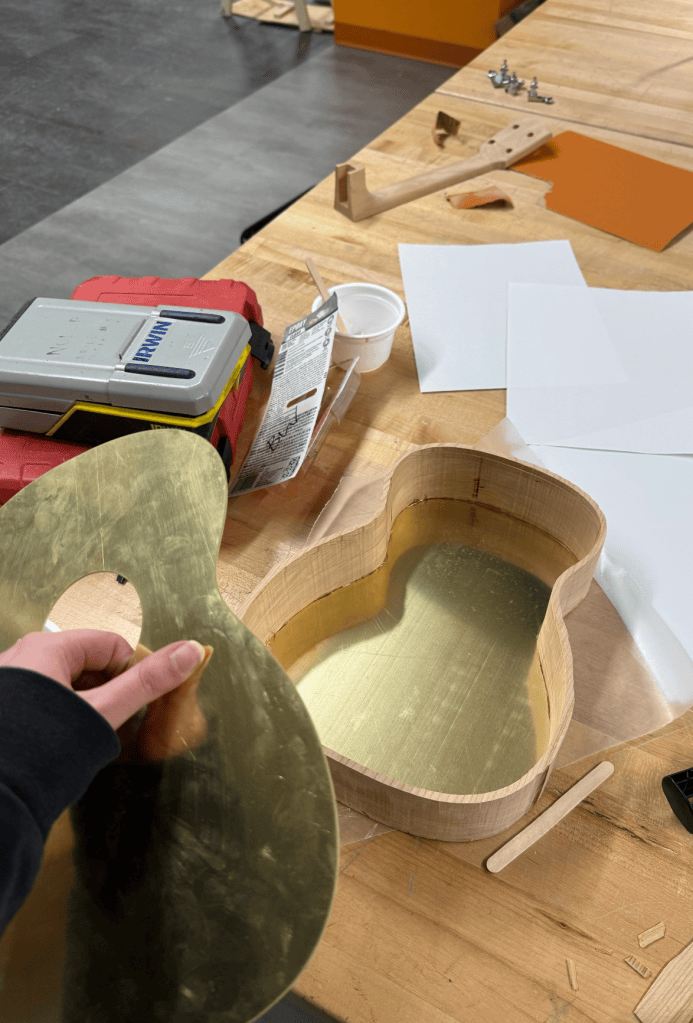
This project was one of my favorite things that I have every made. Making an instrument that merely doesn’t fall apart is hard, and making one that sounds good is even harder. I also learned CNC machining, sanding techniques, and where not to use epoxy. My first cut, the neck, took over 14 hours because I had never used a CNC before. I now feel confident using one for future projects.

